-

EU Proposal Could Mandate User-Replaceable Batteries in Phones and Tablets
A draft EU proposal could require smartphones, tablets, and wireless earbuds sold in Europe to have user-replaceable batteries, a move aimed at reducing e-waste. The plan, which faces industry pushback, would force manufacturers to rethink device design. If adopted, it could have global implications for electronics production.
-

Dinosaur-Killing Asteroid Debris Found in Fossilized Amber
Researchers have uncovered tiny fragments of asteroid dust preserved in amber from the Hell Creek Formation, offering a moment-by-moment record of the day a massive asteroid struck Earth 66 million years ago. The discovery, featured in a new PBS documentary with Sir David Attenborough, may help explain the sudden extinction of the dinosaurs.
-

Sun-Powered Ocean Platforms Could Produce Clean Hydrogen Fuel
Columbia Engineering researchers have developed a floating solar-powered device that splits seawater into hydrogen fuel without carbon emissions. The prototype, which uses a membrane-free design, could lead to large-scale ocean platforms for sustainable hydrogen production.
-

Nuclear Command Chief's Energy Drink Habit Raises Eyebrows at Briefing
Admiral Charles Richard, head of U.S. Strategic Command, casually mentioned consuming multiple Monster energy drinks before a briefing, drawing attention to the commander responsible for the nation's nuclear arsenal. His office decor, featuring images of foreign leaders under the phrase 'Not Today,' adds to the unusual portrait of the military official.
-

Physicists Propose a Real-World Device Inspired by a Sci-Fi Icon
Physicists from Australia and Switzerland have proposed a device they call a flux capacitor, which, unlike the movie prop, doesn't enable time travel but could advance quantum computing. Their designs, published in Physical Review Letters, use quantum tunneling to control microwave flow, potentially improving signal control in electronics.
-
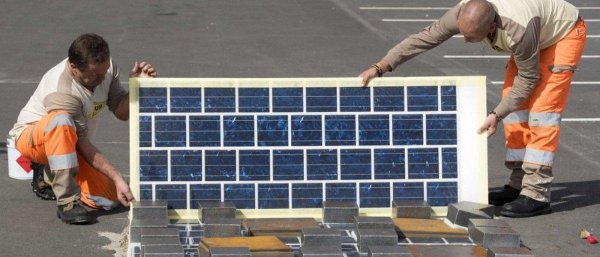
Normandy's New Solar Road: A $5.2 Million Experiment in Renewable Energy
France has inaugurated a one-kilometer solar panel road in Normandy, a $5.2 million project aimed at testing the viability of generating electricity from road surfaces. While officials tout its potential, experts question the cost and efficiency of the flat-mounted panels.
-

China's Space Station Hosts Synthetic Embryo Study to Probe Reproduction in Orbit
China has sent synthetic human embryos to its Tiangong space station to study how microgravity affects early human development. The experiment, led by the Chinese Academy of Sciences, aims to inform future long-duration space missions. Results will be analyzed after samples return to Earth.
-

Carbon Dioxide Surge Could Outpace Anything in 200 Million Years
A new study warns that if current emission trends persist, atmospheric CO2 could reach 2000 ppm by 2250—levels not seen since the Triassic. The rapid rate of increase, combined with a brighter sun, may create a climate with no known natural counterpart in 420 million years.
-
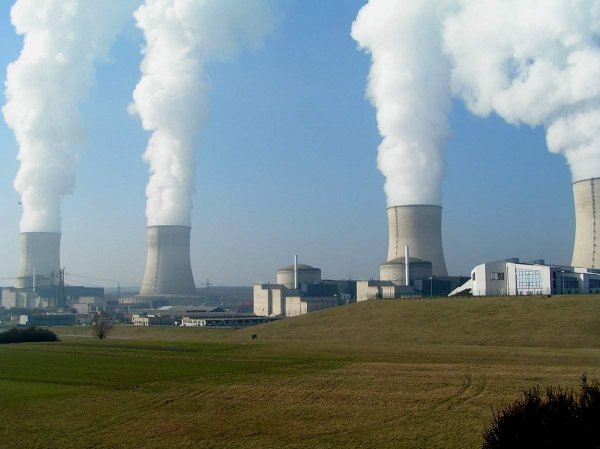
Thorium Reactors Gain Fresh Attention as Nuclear Safety Option
A Dutch firm has resumed testing thorium-based nuclear fission, a technology dormant since the 1970s. Thorium-salt reactors promise inherent safety and reduced weapons proliferation risks. The move signals growing global interest in alternative nuclear fuel cycles.
-

North Dakota Pipeline Rupture Near Standing Rock Ignites Safety Debate
A pipeline rupture in western North Dakota spilled over 176,000 gallons of crude oil, intensifying the ongoing debate over pipeline safety and the Dakota Access project. Protesters and tribal leaders point to the spill as evidence of systemic risks, while state officials assess the environmental damage.
-

CERN Data Hints at New Particles Beyond Standard Model
New measurements from the Large Hadron Collider show a 2.5 sigma discrepancy in meson decay rates, hinting at possible new physics. Researchers propose upgrading the collider to confirm the existence of leptoquarks or Z prime particles, which could reshape fundamental physics.
-
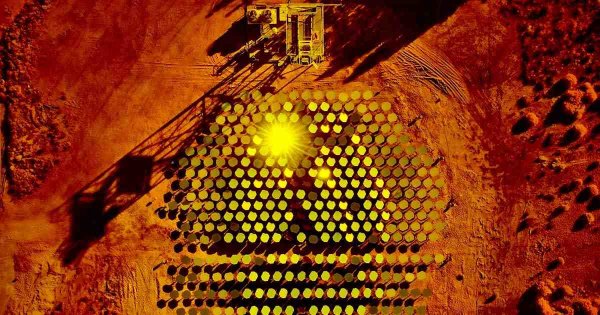
Solar Breakthrough Could Slash Industrial Carbon Emissions
Heliogen, a startup backed by Bill Gates, has achieved a solar thermal breakthrough by using AI to focus sunlight to over 1,000°C, a temperature sufficient for industrial processes like steel and cement production. The technology could help decarbonize heavy industries that currently rely on fossil fuels.