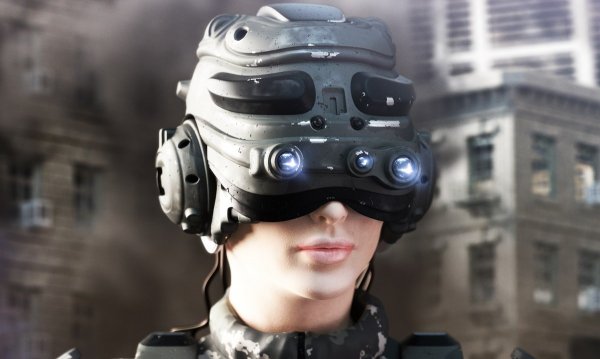
The Defense Advanced Research Projects Agency (DARPA) has launched a new initiative to develop protective measures for military mixed reality (MR) systems against what it terms “cognitive attacks” — cyber intrusions designed to manipulate a soldier’s perception, decision-making, or physical state. The program, announced on DARPA’s public portal, calls for “building tactical mixed reality systems that protect against cognitive attack,” according to documents accompanying the solicitation.
While the agency’s description is heavy with technical jargon, the threat scenarios it outlines are concrete. Potential attacks include flooding a user with information to increase equipment latency and induce physical illness, planting real-world objects to overwhelm displays, subverting a personal area network to sow confusion, injecting virtual data to distract personnel, or using objects to trigger confusing false alarms. The documents also mention that an attacker could assess a user’s state through an eye tracker, raising concerns about privacy and manipulation.
The reference to “physical illness” has drawn particular attention. As noted by The Register, which first reported the initiative, this could be a euphemism for nausea — a condition that would effectively turn the MR headsets into “vomit extractors,” a grim prospect for soldiers in the field.
History of Headset Troubles
The concern is not purely hypothetical. Microsoft’s HoloLens headsets, developed for the U.S. Army under a contract worth nearly $22 billion, have faced repeated issues since testing began in 2021. Bloomberg reported last year that internal Army documents described the goggles as causing “mission-affecting physical impairments,” including nausea, headaches, and eyestrain. Leaked internal reports revealed that soldiers disliked the devices, and in January 2023, the Army ordered a redesign.
However, Congress significantly scaled back funding for the redesign, allocating only $40 million instead of the $400 million the Army had requested. Just last month, the Army announced that the redesigned HoloLens goggles no longer induce nausea — a step forward, but one that underscores the rocky path of the program.
Why This Matters
The DARPA initiative reflects a broader recognition that as the military integrates augmented and virtual reality into training and operations, these systems become new attack surfaces. Cognitive attacks could not only degrade performance but also cause physical harm, as the nausea issue demonstrates. The program aims to build resilience into the hardware and software, ensuring that soldiers can trust their digital environments under duress.
The juxtaposition of the cognitive attack threat with the HoloLens’ troubled history raises questions about the pace of military tech adoption. While the Army’s latest announcement suggests progress, the fact that a $22 billion program faced such fundamental issues — and that Congress balked at the full cost of fixes — highlights the challenges of fielding cutting-edge gear in real-world conditions.
As DARPA seeks proposals from industry and academia, the outcome could shape the future of military mixed reality, potentially influencing how the Pentagon approaches cybersecurity for immersive technologies. For now, the agency’s call for proposals marks an acknowledgment that the next battlefield may include not just physical threats, but digital ones aimed at the mind itself.






Comments
0