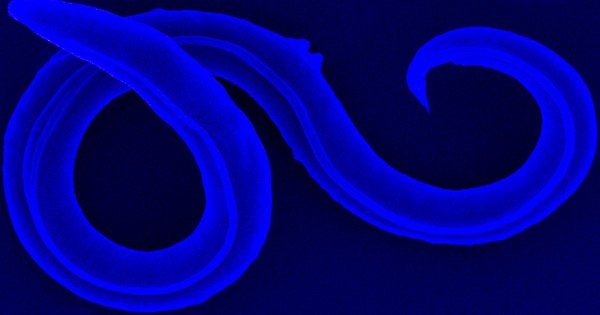
An international research team has brought 46,000-year-old roundworms back to life after they were found frozen 130 feet beneath the Siberian permafrost. The microscopic organisms, once thawed in a laboratory, resumed normal activity and began reproducing, a feat that could reshape understanding of how life endures extreme conditions over geological timescales.
The worms, identified as a previously unknown species of nematode, were described in a study published in the journal PLOS Genetics. The team, including researchers from the University of Cologne, detailed how the creatures entered a state called cryptobiosis — a suspended animation-like condition where metabolism halts, allowing survival for tens of thousands of years.
In experiments, the researchers subjected both the ancient worms and a modern control group to mild desiccation and freezing. Both groups survived temperatures as low as -112 degrees Fahrenheit, a resilience similar to that seen in tardigrades, also known as water bears.
Revival was straightforward. According to Philipp Schiffer, an evolutionary biologist at the University of Cologne and co-author of the study, placing the worms on an agar plate with bacteria and humidity at room temperature was enough to rouse them. "They just start crawling around then," Schiffer told Vice. "They also just start reproducing."
Because the species is all-female and asexual, reproduction did not require mating. "They don't need to find males and have sex," Schiffer explained. "They just start making eggs, which develop."
The implications extend beyond the novelty of reviving ancient life. The study suggests that by adapting to short-term cryptobiosis in environments like permafrost, some nematode species may have gained the capacity to remain in that state for geological timeframes. This could mean that as global warming thaws permafrost, dormant organisms might be awakened, potentially restoring lineages that were thought extinct.
"Our findings indicate that by adapting to survive [in a] cryptobiotic state for short time frames in environments like permafrost, some nematode species gained the potential for individual worms to remain in the state for geological timeframes," the paper states.
While the research does not suggest a Jurassic Park scenario, it does highlight a survival mechanism that could inform how complex organisms respond to rapidly changing climates. The ability to pause life and resume it millennia later offers a unique window into biological resilience.
Scientists are now exploring how these mechanisms might be applied to understanding climate adaptation, though the study stops short of proposing direct applications. The discovery adds a new chapter to the study of extremophiles — organisms that thrive in environments once considered uninhabitable.





Comments
0