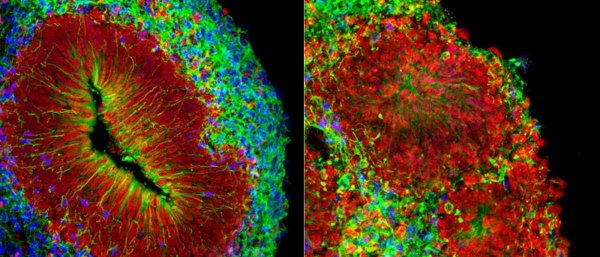
A 16-year-old high school student has developed a 3D-printed bioreactor that can grow hundreds of miniature human brain models, offering a low-cost alternative to commercial devices that cost five times as much. The invention, named SpinΩ, was created during a summer internship at Johns Hopkins University and has already become a key tool in research on the Zika virus.
Mini-brains are tiny clusters of brain cells that replicate certain functions of a full-sized human brain, such as emitting electrical signals. They allow scientists to study brain processes and test treatments without requiring human donors. Christopher Hadiono, then a student at Byram Hills High School in New York, spent the summer of 2013 working under the guidance of Hongjun Song, director of the Stem Cell Program and professor of neurology at Johns Hopkins. During that period, Hadiono designed a bioreactor that is smaller, cheaper, and capable of holding more than twice as many mini-brains as existing models.
Commercial bioreactors typically cost around $2,000, but SpinΩ can be built for roughly $400. Its compact size allows multiple units to operate simultaneously, and it exposes mini-brains to about twice as many experimental conditions. This means researchers can run more tests in less time, at a lower cost, and with greater flexibility.
From Internship to Innovation
Song, who supervised Hadiono's work, expressed surprise at the outcome. “We did not think that even a biotechnology graduate student could make this into a reality,” he said. “Once you have a good idea, that changes everything.” The design has accelerated the pace of experiments and broadened their scope, according to the researchers.
Hadiono's invention is now a central component in studies examining how the Zika virus affects brain development during different stages of pregnancy. The ability to grow many mini-brains simultaneously allows scientists to test multiple conditions at once, which is crucial for understanding the virus's impact.
The blueprint for SpinΩ is being made available to the public, enabling anyone with a 3D printer to produce their own bioreactor at a low cost. This open-access approach could democratize advanced research tools, particularly for labs with limited budgets.
Hadiono, who is now studying engineering at Case Western Reserve University in Ohio, has demonstrated that age is not a barrier to meaningful scientific contribution. His work exemplifies how accessible technology like 3D printing can be harnessed to solve complex research challenges.





Comments
0