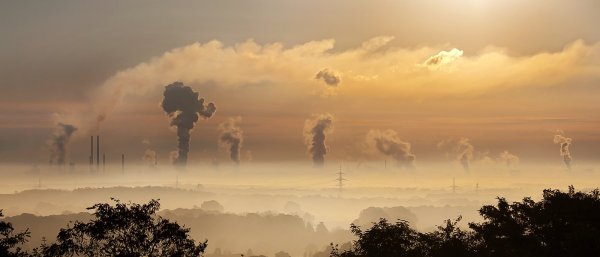
Atmospheric carbon dioxide concentrations could climb to levels unseen in 200 million years if current emission trajectories hold, according to a new analysis published in Nature Communications. The study, led by Gavin Foster, a professor of isotope geochemistry at the University of Southampton, projects that CO2 could reach 2000 parts per million by the year 2250—a threshold not present on Earth since the Triassic period.
The research does not merely examine absolute CO2 levels; it focuses on the speed of change. Since the industrial revolution began roughly 150 years ago, atmospheric CO2 has jumped from 280 ppm to nearly 405 ppm as measured last year. That sharp upward curve, the authors argue, is what makes the current situation distinct from historical fluctuations.
While the planet has experienced higher CO2 concentrations in its deep past, the circumstances today are fundamentally different. During the Triassic, elevated CO2 occurred naturally. Now, human activity is the primary driver. Moreover, the sun is significantly brighter than it was 200 million years ago, meaning the same CO2 level would produce a stronger warming effect today.
Foster explained that because the sun was dimmer during the Triassic, the net climate forcing from high CO2 was lower than what would be experienced in a future with comparable CO2 levels. As a result, the anticipated climate change would not only occur faster than anything Earth has seen for millions of years, but the resulting climate would likely have no natural counterpart in at least the last 420 million years.
The study's findings underscore the unprecedented nature of the projected changes. Even though CO2 has been higher in Earth's history, the combination of rapid increase and a more luminous sun creates conditions that have no known analog. This makes it difficult to predict exactly what ecosystems and human societies might face.
Why the Rate of Change Matters
The pace of CO2 increase is a critical factor, the researchers emphasize. Past natural shifts in CO2 occurred over millennia, giving life time to adapt. The current spike, driven by fossil fuel combustion and deforestation, is happening in a geological instant. This rapid rise could outpace the ability of many species to adapt, leading to widespread disruption.
The study does not offer a detailed forecast of specific regional impacts, but it highlights the urgency of curbing emissions. The authors note that while the projected 2000 ppm level is a worst-case scenario, it is a plausible outcome if no significant policy changes are implemented.
Potential for Mitigation
Despite the dire projections, the study points to the possibility of altering the course. Renewable energy expansion, both in the United States and globally, has accelerated in recent years, even amid regulatory rollbacks. Public awareness of climate risks has also grown, which could translate into political will for action.
Foster and his colleagues do not prescribe specific policies, but they emphasize that the window for meaningful intervention remains open. The study serves as a scientific benchmark, clarifying the stakes of continued inaction.
The findings add to a growing body of evidence that the climate system is approaching conditions not seen in hundreds of millions of years. Whether that trajectory is realized depends on decisions made in the coming decades.



Comments
0