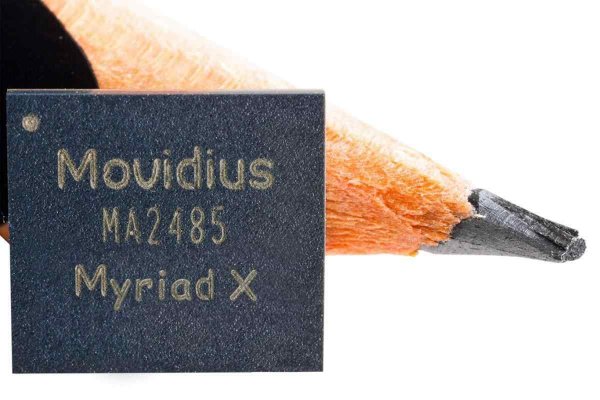
On August 28, Intel introduced the Movidius Myriad X, a vision processing unit (VPU) that the company says is the first to include a dedicated Neural Compute Engine. The chip is designed to bring artificial intelligence capabilities to devices such as drones, robotics, smart cameras, and virtual reality hardware, combining high performance with low power consumption. As a result, these devices can process visual data and respond to their surroundings in real time, without relying on a cloud connection.
VPUs are a class of microprocessors optimized for machine vision tasks. The Myriad X is the first system-on-chip (SoC) to feature an on-chip Neural Compute Engine, a dedicated hardware block that accelerates deep learning inferences and runs deep neural networks. This allows the chip to handle the full pipeline of visual perception: sensing the environment, analyzing the data, and triggering a response.
The Neural Compute Engine delivers up to one trillion operations per second (TOPS) of deep learning inference performance, all within a single watt of power. According to Intel, this is an order of magnitude faster than the previous generation of Movidius chips, making the Myriad X suitable for power-constrained, untethered devices.
Offline Intelligence for Autonomous Devices
One of the key advantages of the Myriad X is that it enables devices to operate intelligently without an internet connection. Because the AI processing happens on the chip itself, devices can interact with their environment and perform their intended functions even when offline. This is particularly important for applications like autonomous delivery drones, surveillance systems, and personal robots that need to make split-second decisions in dynamic settings.
Intel envisions a wide range of uses for the Myriad X, from consumer drones to security cameras and baby monitors. The chip's ability to run deep neural networks locally also opens up possibilities for devices with contextual awareness, such as robots that can recognize emotions and respond appropriately.
“We’re on the cusp of computer vision and deep learning becoming standard requirements for the billions of devices surrounding us every day,” said Remi El-Ouazzane, vice president and general manager of Movidius, Intel New Technology Group. “Enabling devices with humanlike visual intelligence represents the next leap forward in computing. With Myriad X, we are redefining what a VPU means when it comes to delivering as much AI and vision compute power possible, all within the unique energy and thermal constraints of modern untethered devices.”
Looking Ahead
Intel says it plans to continue pushing the envelope on edge compute performance while keeping power consumption in check. The company believes that this line of technology will lead to new autonomous devices that simplify daily tasks and expand human capabilities. El-Ouazzane, quoting Antoine de Saint-Exupéry, added: “As for the future, your task is not to foresee it, but to enable it.”






Comments
0