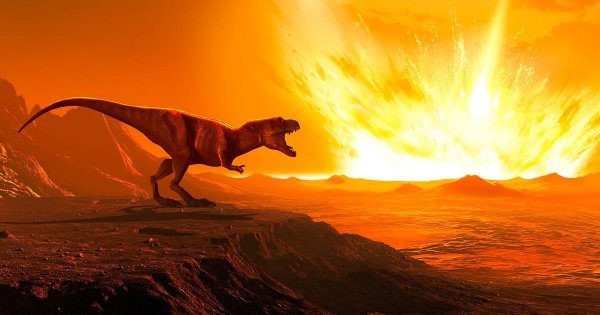
In a discovery that could reshape our understanding of the dinosaurs' final hours, scientists have identified tiny fragments of vaporized asteroid dust preserved in amber from a fossil site in North Dakota. The find, featured in a new PBS documentary narrated by Sir David Attenborough, offers an unprecedented glimpse into the catastrophic chain of events triggered by a massive asteroid impact 66 million years ago.
The amber specimens were collected from the Hell Creek Formation, a geological treasure trove in the Western United States known for its rich deposits of dinosaur fossils. According to a CNN report, the site's proximity to the impact zone—approximately 2,000 miles from the crater off the coast of Mexico—suggests that the animals preserved there may have perished on the very day the asteroid struck.
Paleontologist Robert DePalma, who led the excavation, described the amber as a time capsule that captures the immediate aftermath of the impact. "It gives a moment by moment story of what happens right after impact and you end up getting such a rich resource for scientific investigation," he told CNN. "In that amber we've located a number of spherules that were basically frozen in time. They're perfectly preserved."
These spherules—tiny beads of glass and rock formed by the intense heat and pressure of the impact—are considered direct evidence of the asteroid's composition. Their presence in the amber suggests that the debris cloud from the impact traveled thousands of miles before settling, and that the Hell Creek ecosystem was engulfed in a hail of molten material within hours of the collision.
The fossil site has also yielded a haunting array of remains, including fish with gills clogged with toxic debris, a turtle impaled on a stick, and a dinosaur leg that may have been torn from its body by the force of the blast. These findings paint a vivid picture of a world in chaos, where life was extinguished in a matter of moments.
Scientific Scrutiny and the Path to Publication
While the findings have not yet undergone peer review, they have already attracted attention from the scientific community. Michael Benton, a professor of vertebrate paleontology at the University of Bristol, served as a scientific adviser on the documentary and has expressed confidence in the accuracy of the conclusions, according to CNN.
The documentary, titled "Dinosaur Apocalypse," is set to premiere on PBS this week. It follows DePalma and Attenborough as they examine the evidence and piece together the sequence of events that led to the extinction of non-avian dinosaurs and countless other species.
The implications of this research extend beyond the fate of the dinosaurs. Understanding the precise mechanics of the impact and its immediate effects could provide valuable insights into how life on Earth responds to sudden, catastrophic environmental changes—knowledge that may prove crucial in assessing modern threats, from climate change to asteroid impacts.
For now, the amber fragments stand as a silent testament to a day that changed the course of natural history. As the scientific community awaits peer-reviewed publication, the discovery offers a tangible connection to a moment that has long been shrouded in mystery.

Comments
0