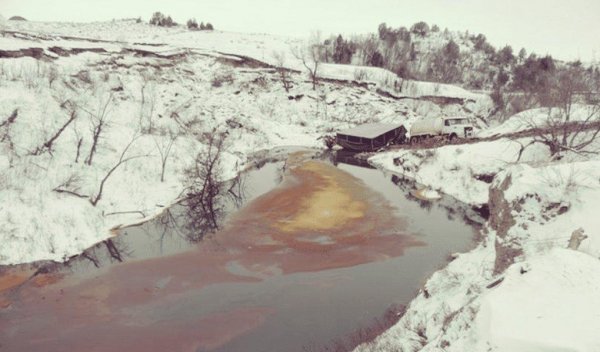
BISMARCK, N.D. — A pipeline rupture in western North Dakota has spilled more than 176,000 gallons of crude oil, re-igniting a fierce debate over the safety of the nation's energy infrastructure. The leak occurred on the Belle Fourche Pipeline near Belfield, about 150 miles west of the Standing Rock Sioux Reservation, where months of protests against the Dakota Access pipeline have drawn national attention.
According to state environmental officials, the spill was discovered earlier this month. Bill Suess, an environmental scientist with the North Dakota Department of Health, told the Inforum that 130,200 gallons of crude oil flowed into Ash Coulee Creek, while an additional 46,200 gallons soaked into the adjacent hillside. The Belle Fourche Pipeline is owned by True Companies, a separate entity from the firm constructing the Dakota Access pipeline, but the incident has nonetheless become a rallying point for opponents of fossil fuel development.
For the self-described “water protectors” at Standing Rock, the timing of the spill has provided a stark validation of their warnings. “The spill gives further credence to our position that pipelines are not safe,” said Tara Houska, a Native American environmental activist involved in the protests, in an interview with NBC News. “Oil companies’ interest is on their profit margins, not public safety.”
Critics have also pointed to the failure of the pipeline’s detection systems. The spill went unnoticed until it had already released a significant volume of oil, raising questions about the effectiveness of the monitoring technology that operators tout as a safeguard. Standing Rock Sioux Chairman Dave Archambault II told NBC News, “They can say they have all the latest technologies to safeguard against a leak, but when that leak happens, and it will, all those safeguards will go out the window.”
The incident has intensified the broader debate over the future of energy infrastructure. Dallas Goldtooth, a member of the Dakota Nation and an organizer with the Indigenous Environmental Network, called the spill a wake-up call. “This should encourage everyone who believes in protecting Mother Earth that we need to examine and critique every fossil fuel project that’s being put on the table,” he said.
Clean Energy Gains Ground
The spill comes at a time when renewable energy is gaining economic momentum. In May of this year, a report indicated that clean energy jobs had surpassed oil drilling jobs for the first time in the United States, a shift that some analysts say could signal a long-term transition in the country’s energy landscape. As renewable sources become more cost-competitive, the economic argument for fossil fuel projects may weaken, though the infrastructure built today will likely remain in use for decades.
The full environmental impact of the Belle Fourche spill is still being assessed. Cleanup crews are working to contain the oil, but the damage to Ash Coulee Creek and the surrounding land may be long-lasting. For the Standing Rock Sioux and their allies, the incident has become a symbol of the risks they say are inherent in oil transport.
As the legal and political battles over the Dakota Access pipeline continue, the spill near Belfield has added a new layer of urgency to the conversation. Whether it will change the calculus for regulators or the industry remains to be seen, but for those who have long opposed the project, the evidence is mounting.






Comments
0