A California-based startup backed by Bill Gates says it has developed a solar technology that can generate enough heat to power heavy industries like steel and cement manufacturing, potentially displacing fossil fuels and cutting global carbon emissions.
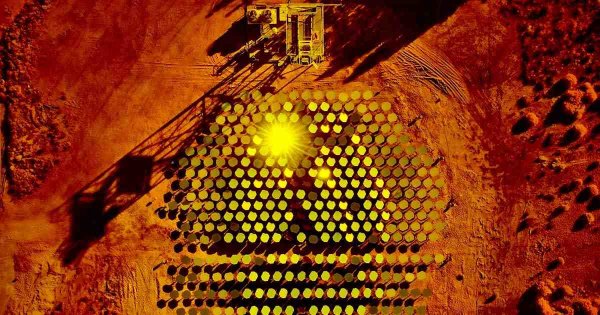
Heliogen, a company founded by entrepreneur Bill Gross, announced that its concentrated solar system, guided by an artificial intelligence algorithm, can focus a field of mirrors onto a single point, heating it to more than 1,000 degrees Celsius. That temperature is roughly one-quarter of the heat found on the surface of the Sun and is sufficient for producing materials such as steel and cement, which today rely on burning fossil fuels.
The achievement marks a step forward for concentrated solar power, a concept that has existed for decades but has been limited by lower temperatures. Heliogen says it is the first to reach such high heat levels using AI to precisely position the mirrors, allowing for more efficient energy capture.
The potential impact is significant. The International Energy Agency estimates that cement manufacturing alone accounts for seven percent of global carbon dioxide emissions. If Heliogen's technology can be scaled, it could offer a clean alternative for these emission-intensive industries.
Why This Matters for Heavy Industry
Steel and cement production are notoriously difficult to decarbonize because they require intense heat that has historically been provided by burning coal or natural gas. Heliogen's approach could change that by providing a renewable source of high-temperature heat.
Bill Gross, the company's CEO, told CNN that the technology is designed to compete with fossil fuels on cost while eliminating CO2 emissions. "We are rolling out technology that can beat the price of fossil fuels and also not make the CO2 emissions," he said. "And that's really the holy grail."
Beyond steel and cement, Gross has broader ambitions. He is working to scale the system to produce hydrogen fuel, which could be used in transportation and other sectors. "If you can make hydrogen that's green, that's a gamechanger," Gross told CNN. "Long term, we want to be the green hydrogen company."
The company's progress is being watched closely by the energy industry, which is under increasing pressure to reduce its environmental footprint. While the technology is still in its early stages, the ability to generate high-temperature heat from sunlight could offer a path toward cleaner manufacturing.
Heliogen's breakthrough comes amid growing interest in renewable energy solutions for industrial applications. Solar power has already become a major source of electricity, but using it for heat-intensive processes has remained a challenge. This development could help bridge that gap.
As the company works to scale its technology, the key question will be whether it can achieve the reliability and cost-effectiveness needed to attract industrial customers. If successful, it could play a role in reducing global greenhouse gas emissions.






Comments
0