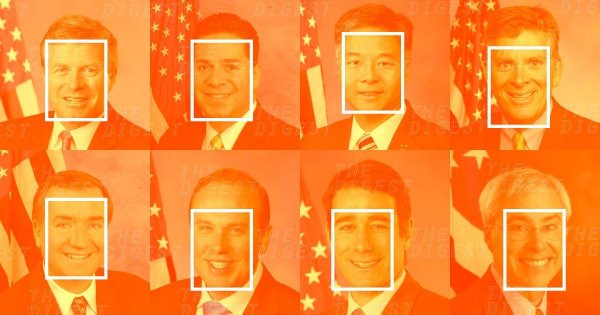
A low-cost experiment by the American Civil Liberties Union has cast a spotlight on the reliability of facial recognition technology, revealing that Amazon's Rekognition system incorrectly identified 28 sitting members of Congress as matches to mugshots. The test, which cost just $12.33, used the system's default 80 percent confidence threshold, a setting the company itself now acknowledges is too low for consequential uses like law enforcement.
The ACLU ran the test on Thursday, comparing a database of 25,000 publicly available mugshots against the photos of every representative in both the Senate and the House. The results were striking: Rekognition returned false positives for 28 lawmakers, and the errors were not evenly distributed. While people of color make up about 20 percent of Congress, they accounted for 39 percent of the false matches, according to the ACLU's analysis.
The findings underscore a broader concern about the deployment of facial recognition in policing, where a mistaken identification can have severe consequences. "People of color are already disproportionately harmed by police practices, and it's easy to see how Rekognition could exacerbate that," the ACLU wrote in its blog post. "An identification — whether accurate or not — could cost people their freedom or even their lives."
Amazon Defends the Technology, Points to Calibration
In response to the ACLU's test, an Amazon spokesperson told The Verge that the false matches were likely due to the low confidence threshold. "While 80 percent confidence is an acceptable threshold for photos of hot dogs, chairs, animals, or other social media use cases, it wouldn't be appropriate for identifying individuals with a reasonable level of certainty," the spokesperson said. Amazon recommends a 95 percent confidence threshold for any situation where a match could have significant consequences, such as law enforcement use.
The company's clarification comes as it actively markets Rekognition to government and police agencies, several of which are already using the service. The pricing model is accessible — Amazon charges only for the images processed, minutes of video, and faces stored — making it easy for any organization to adopt the technology, as the ACLU demonstrated.
Growing Pressure on Amazon to Halt Government Contracts
The ACLU is not alone in urging Amazon to stop providing Rekognition to government agencies. Amazon shareholders and employees have voiced similar concerns, as have dozens of civil rights groups and tens of thousands of members of the public. Despite the mounting pressure, Amazon has not indicated any intention to change its approach.
The ACLU's blog post calls for a halt on law enforcement use of facial recognition software, a move that could gain traction if lawmakers see firsthand the system's flaws. The test's results, which show that even a well-known technology can produce significant errors at default settings, may prompt Congress to consider legislative action.
The episode adds to a growing body of evidence that facial recognition systems can exhibit bias and error, particularly when used in high-stakes settings. As the debate over surveillance technology intensifies, the ACLU's low-cost test serves as a reminder that even small-scale scrutiny can reveal significant vulnerabilities.

Comments
0