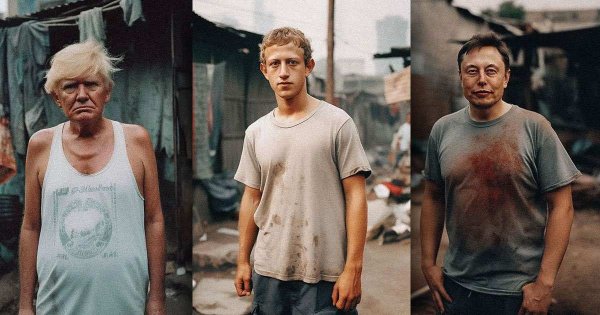
An artificial intelligence artist has generated a series of hyper-realistic images depicting some of the world's wealthiest technology executives living in conditions of extreme poverty, a project that has ignited conversation about wealth inequality and the power of AI-generated imagery.
India-based digital creator Gokul Pillai posted the collection on Instagram under the caption “slumdog millionaires,” a nod to the 2008 Oscar-winning film. The images, created using the AI tool Midjourney, show figures such as Meta CEO Mark Zuckerberg, Amazon founder Jeff Bezos, former President Donald Trump, investor Warren Buffett, Tesla chief Elon Musk, and Microsoft co-founder Bill Gates in settings that evoke overcrowded urban slums.
Mashable SEA first spotted the post, which has since drawn widespread attention across social media platforms. The visuals are striking for their realism, but they also rely heavily on stereotypical portrayals of poverty, echoing the aesthetic of the movie “Slumdog Millionaire.”
The timing of the release is notable, coming amid a wave of AI-generated images that have blurred the line between reality and fiction. Recent examples include fabricated photographs of Trump being arrested and a convincing image of Pope Francis wearing a puffer jacket. These images have raised concerns about the potential for AI to spread misinformation, even as the technology becomes more accessible.
Pillai's work adds a layer of irony, as many of the billionaires depicted have made significant investments in AI development. Both Gates and Musk, for instance, have funded AI research while also publicly warning about its risks. The choice of subjects may be deliberate, or it may simply reflect the fact that many of the world's richest people are now involved in the AI sector.
Wealth, Poverty, and the AI Paradox
The series offers a glimpse into an alternate reality where the ultra-rich struggle to make ends meet. But it also underscores a paradox: the very technology used to create these images is being shaped by the individuals portrayed. This duality has not been lost on viewers, who have debated whether the images are a commentary on economic disparity or merely a viral spectacle.
While the artist's intent remains unclear, the project has succeeded in prompting reflection on how AI can be used to visualize social issues. It also highlights the ethical questions surrounding AI-generated content, particularly when it involves real people in unflattering or fictional scenarios.
As AI tools like Midjourney become more sophisticated, the line between authentic and synthetic media continues to blur. This series is a reminder that the technology, while creative, carries implications that extend far beyond the digital canvas.


Comments
0