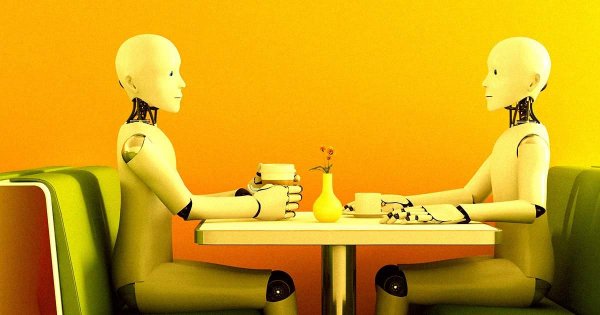
A linguistic quirk common in AI-generated writing is now surfacing in everyday conversation, according to educators who say the pattern has become a telltale sign of machine-produced text. The construction—typically phrased as “it’s not X, it’s Y”—has become so widespread that some teachers report hearing it spoken aloud in classrooms and video essays.
The observation first gained traction in a Reddit thread where a teacher described noticing the structure in student essays and comments. “I’ve straight up noticed the ‘that’s not X, it’s [Y]’ structure being said out loud more often than it used to be in video essays and other similar content,” the user wrote. The teacher added that the pattern now triggers an automatic assumption that AI was involved, saying, “Makes me grimace just a bit on the inside.”
Other users quickly echoed the sentiment, with some parodying the style in their replies. One comment read, “You’re not just seeing it — you’re saying something. And that’s not illusion — that’s POWER.” Another noted, “It’s almost as if AI use is becoming the preferred way of communication. It’s not just frustrating — it’s insulting.”
The phenomenon extends beyond the “not X, but Y” structure. Em-dashes, once a mark of sophisticated writing, are now widely viewed as a red flag for AI authorship. Emojis, particularly green checkmarks and red X’s, are also cited as common markers of generated content.
Why the Pattern Emerges
Linguists and technologists point to the underlying mechanics of large language models. These systems are trained on massive datasets and use probabilistic calculations to predict the next word in a sequence. The result is text that often favors coherence and polish over the messy, unpredictable quality of human writing. The “not X, but Y” construction fits neatly into that pattern, offering a balanced, contrastive structure that models find statistically likely.
The issue has become particularly acute in education. A majority of students now admit to using tools like ChatGPT for essays and homework, and some teachers have begun using AI for grading. This closed loop has prompted warnings from experts about the potential harm to learning outcomes.
Tech companies have yet to produce reliable AI detection tools, leaving educators to rely on their own judgment. The stakes are rising as the internet fills with AI-generated content, often referred to as “slop,” which threatens to drown out human-authored text.
Call for Messier Writing
In response, some are advocating for a return to imperfect, human writing. One Reddit user argued, “GPT is always going to sound polished. It’s a machine that rewards coherence, which is why incoherence has never been more precious.” They added, “We need the rough edges. The voice cracks. The unexpected pause. The half-formed metaphor that never quite lands. Because that’s how you can tell a human is still in there, pushing back.”
The debate underscores a broader cultural shift as AI-generated text becomes indistinguishable from human writing—and as human speech begins to mirror the machine. Whether this trend will reverse or accelerate remains an open question, but for now, the telltale signs are everywhere.





Comments
0