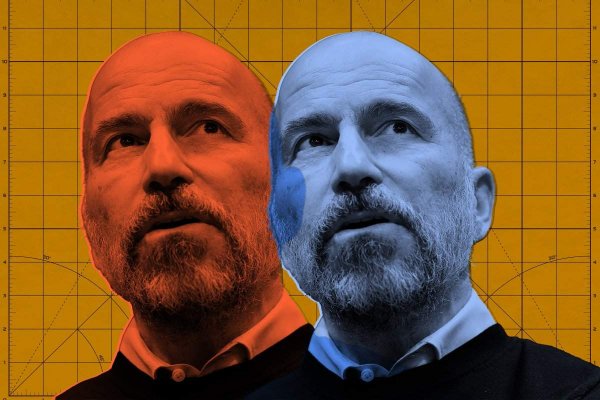
Uber Technologies Inc. employees have taken preparation to a new level by creating an artificial intelligence chatbot that mimics CEO Dara Khosrowshahi, allowing them to rehearse presentations before facing the real executive. Khosrowshahi revealed the practice during a recent appearance on the Diary of a CEO podcast, a story first reported by Business Insider.
According to Khosrowshahi, a team member informed him that some groups within the company had built a "Dara AI" to fine-tune their pitch decks and talking points. "They basically make the presentation to the Dara AI as a prep for making a presentation to me," he said on the show. The CEO sounded both amused and impressed by the initiative, noting that by the time a proposal reaches his desk, it has already been polished through multiple rounds of preparation, including a session with the AI version of himself.
The anecdote underscores a practical use for generative AI: simulating a specific individual to help employees practice high-stakes interactions. While the idea might sound like a plot from a tech satire, it reflects a broader trend of AI being used for role-playing and scenario preparation in corporate settings. The chatbot, presumably trained on Khosrowshahi's public statements and communication style, offers employees a low-pressure environment to test their arguments and anticipate questions.
AI Adoption at Uber
Khosrowshahi also used the podcast to tout the company's embrace of AI tools. He claimed that 90% of Uber's software engineers use AI in their daily work, with about one-third described as "power users." He said the technology is "changing their productivity in a way that I've never, ever seen before," and he projected that AI could eventually make his engineering team 25% more efficient. No specific studies or metrics were cited to back those figures.
His enthusiasm mirrors that of other tech leaders. Nvidia Corp. CEO Jensen Huang has reportedly told his staff that it would be "insane" not to use AI for every possible task. Some executives have also touted AI as a way to reduce headcount, though Khosrowshahi indicated that Uber's engineers are not currently at risk of AI-driven layoffs. He said that if AI boosts efficiency, he might "hire more engineers" to accelerate progress, but he also floated the alternative: "I may not decide to add engineering headcount. At that point, instead of adding an engineer, I should add agents and buy some more GPUs from Nvidia."
The contrast between executive enthusiasm and rank-and-file skepticism is a recurring theme in the current AI wave. While many workers report that AI tools are not yet delivering significant value in their daily tasks, leaders like Khosrowshahi see transformative potential. The "Dara AI" experiment, however, suggests that at least some employees are finding creative ways to leverage the technology for their own benefit.
Whether the chatbot actually helps employees win over the real Khosrowshahi remains an open question. But the practice highlights how AI is being integrated into the fabric of corporate culture, even in ways that might seem more about flattery than functionality.




Comments
0